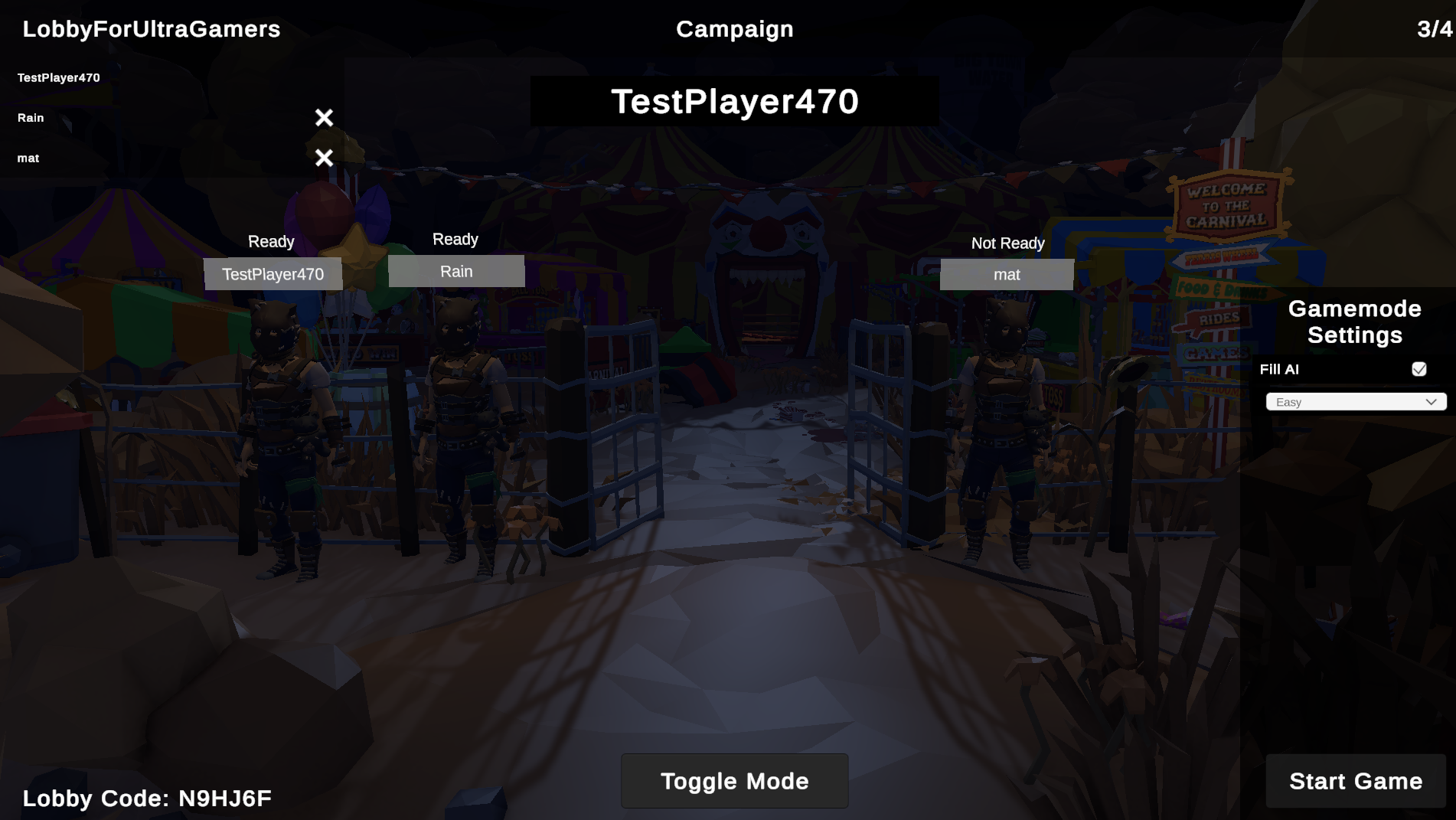
Game Overview:
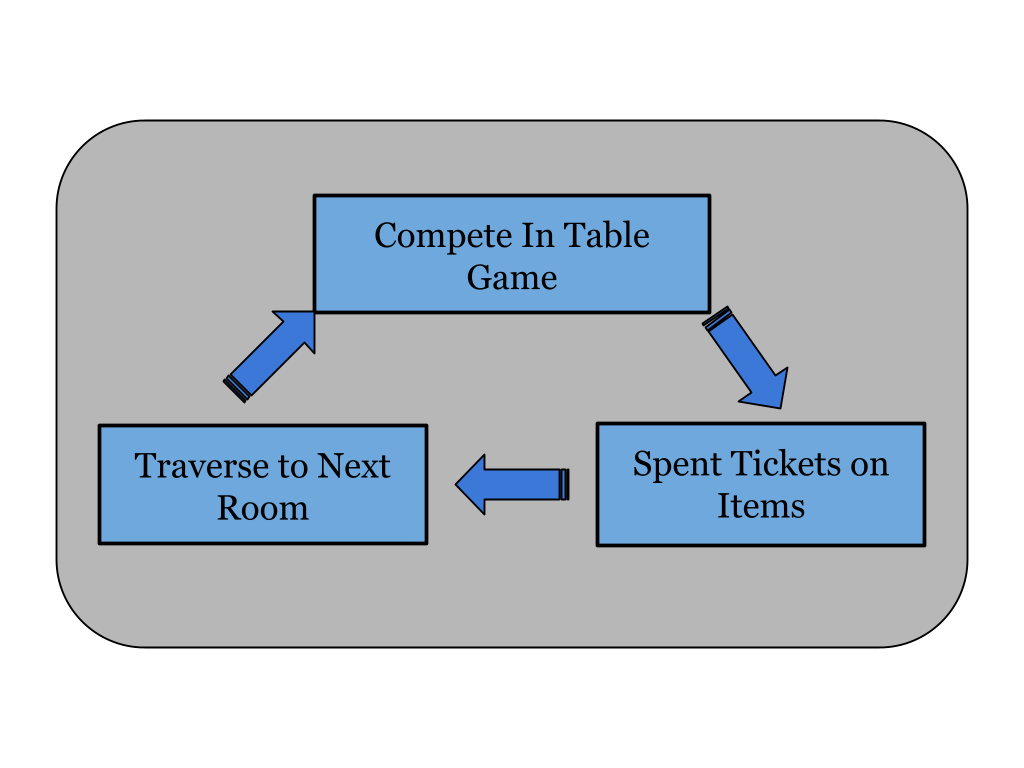
Dealt in Darkness is a casual multiplayer horror game where players compete in series of board and card games with the goal of winning the most carnival tickets. Players receive tickets by placing highly in minigames. These tickets are what buy the players freedom at the end of the game.
Flashfire
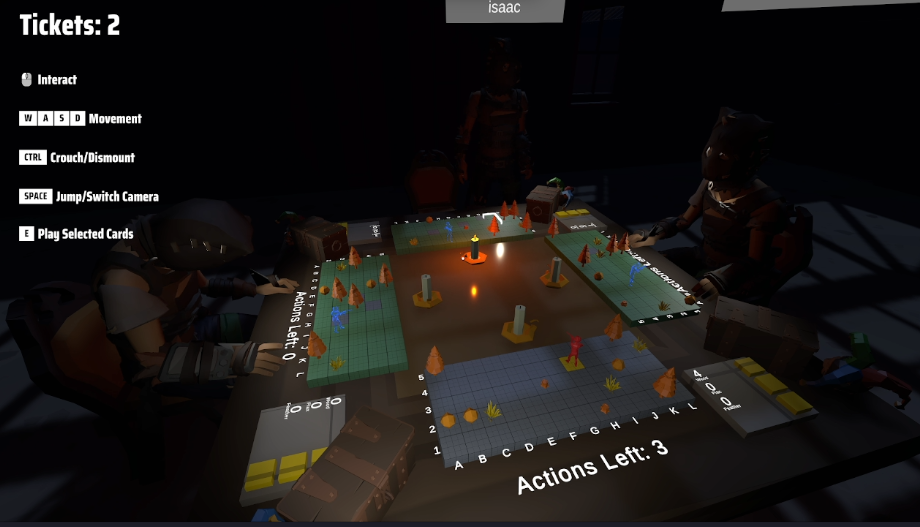
Is a combat deduction game based off of battleship. Play as hunters in a deep forest shooting at other hunters while trying to be the last hunter standing.
Dealt in Darkness gameplay
Core Gameplay Loop
Board games
Threshold
Is a grid based Strategy game where players attempt to be the first to cross a graveyard while also trying to block others or flip the board to in order to gain the advantage.
Approach:
-Use the affordances of current mechanics, shooting and foraging, as bounds for the behavior of the new items to limit complexity.
-Make the items easy to acquire, and their use cases close to the established play patterns.
-Keep the crafting mechanics minimal.
Dealt In Darkness
Genre: Horror Comedy/Party
Type: Active Development
Engine: Unity
Tools: Unity, Blender, Confluence, Trello
Role: Gameplay Designer
Team Size: 7
Dealt In Darkness is structured around main set of four unique board/card games (Table Games). These are sections of gameplay where all players sit around a table attempting to win that rooms table game. During each of these games unique enemies attempt to sabotage the players. These enemies split the players attention and force them to leave the table and take action that to counteract the distractions.
Design Contributions
Problem:
The gameplay for flashfire revolves around deducing where on the game board you enemies are hiding. Playtesting showed that the gameplay quickly became stale and was not engaging enough.
The root of the problem comes from players not having tools to actively figure out where enemy players are and are forced to wait for an opponent to make a mistake. This created turns where players felt a low sense of agency.
Feedback & consensus from development team:
Difficult to balance/ opened many design edge cases
Over rewarded highly aggressive playstyles
Using items are not worth the time investment needed to obtain.
Goal:
Create a small set of items for the player to use during the game of flashfire that supplement the use of their primary fire.
The primary function of these items should be give players information that they can act on in subsequent turns.
Result:
-Added 2 additional resources for players to harvest during their turn.
-Added 3 items for players to craft using, each requiring unique combination of resource.
Introducing these actions added more strategy and layer of tension in the players decision making. I worked to fine tune this balance, having items feel easy to acquire and impactful, but not overlapping the main focus of the game. Keep your fire alive and shoot enemy hunters.
Before the implementation of items, Flashfire had players taking one of each available action on their turns Moving, Collecting Wood, Firing Weapons. Executing actions this way worked well for the structure of the game but was unsatisfying and limiting. This alongside a fresh set of mechanics ready to be introduced (Items) was cause for a redesign of how players took actions in flashfire.
Card Games
Cambio
Is a hidden info/memory card game. The objective is to have your four cards sum to the lowest value. The twist is, all of your cards are face down.
Gumbo
Is a spin on the American card game Bullshit. In Gumbo, players have to add all their cards(Ingredients) to the soup and catch others lying about their contributions.
Cause:
It was important that once a player committed to shooting that they not be allowed to move afterwards. This is because when a player shoots their location is signaled to all other players, letting players move after this signal would render all information given obsolete. This lead to repetitive play patterns causing players to simply “Go through the motions” during their turn.
This alongside the addition of items forces a change to how players execute turns.
Preposed solution:
Give players a bank of “Action points” and cost every action at 1 point. Let players take actions in an combination they choose.
Iteration & Feedback:
Design Revisions:
-Remove cost from collecting materials and crafting items
- Introduce guaranteed shot at the end of each turn outside of action point usage.
-Impose stricter limits on remaining outside of campfires
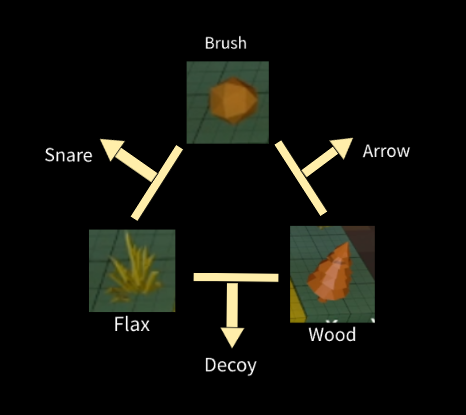
Snare
Trap an area on an opponents board.
When they exit the players are notified and the snared tiles are consumed.
Decoy
Place a Decoy on your board.
The next time you are revealed the decoy’s location is shown instead.
Arrow
Shoot an arrow at an opponents board.
The arrow reveals if the hunter is within its proximity.
Refine Action Economy
Following is a breakdown of features/mechanics from Flashfire that I designed and iterated on, I feel they stand out as examples of my design process and decision making.
Highlighted Contributions:
Design and Iterate Items/Crafting System
Refine Action Economy
Early Iterations:
The actions system allowed players to take varied turns and be creative with ordering but had problems and needed some “guard rails”.
Allowing players to move to far to either side of aggressive or passive gameplay caused to much variance in game duration.
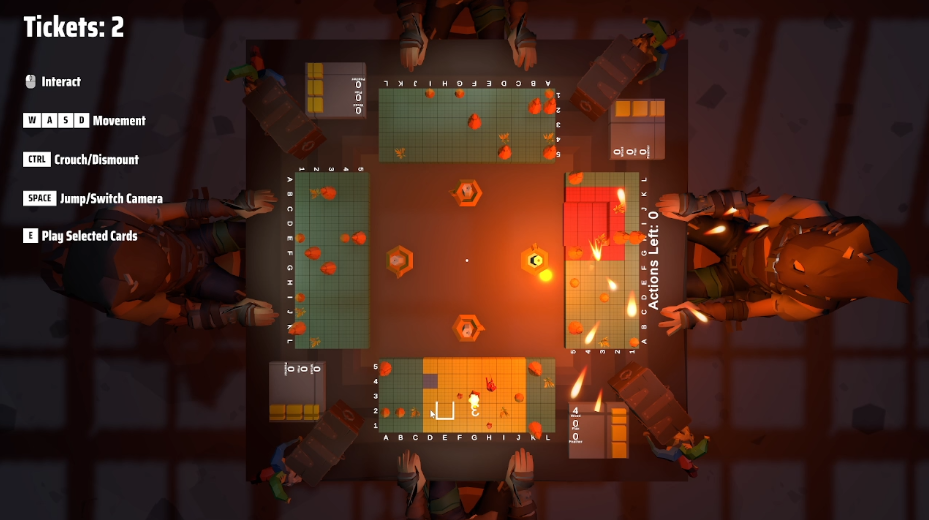
Triple shooting each turn became a viable strategy. Once an opponent saw your Flash and understood your general location seeing it 2 more times didn’t give opponents much more info.
It also opened up a path for extremely passive gameplay. Spending each turn only fueling your fire & crafting items.